
I couldn’t find many rusty objects lying around, but I did notice one of my garden ornaments had become quite rusty over winter, so I decided to try and see what patterns it would make on fabric.
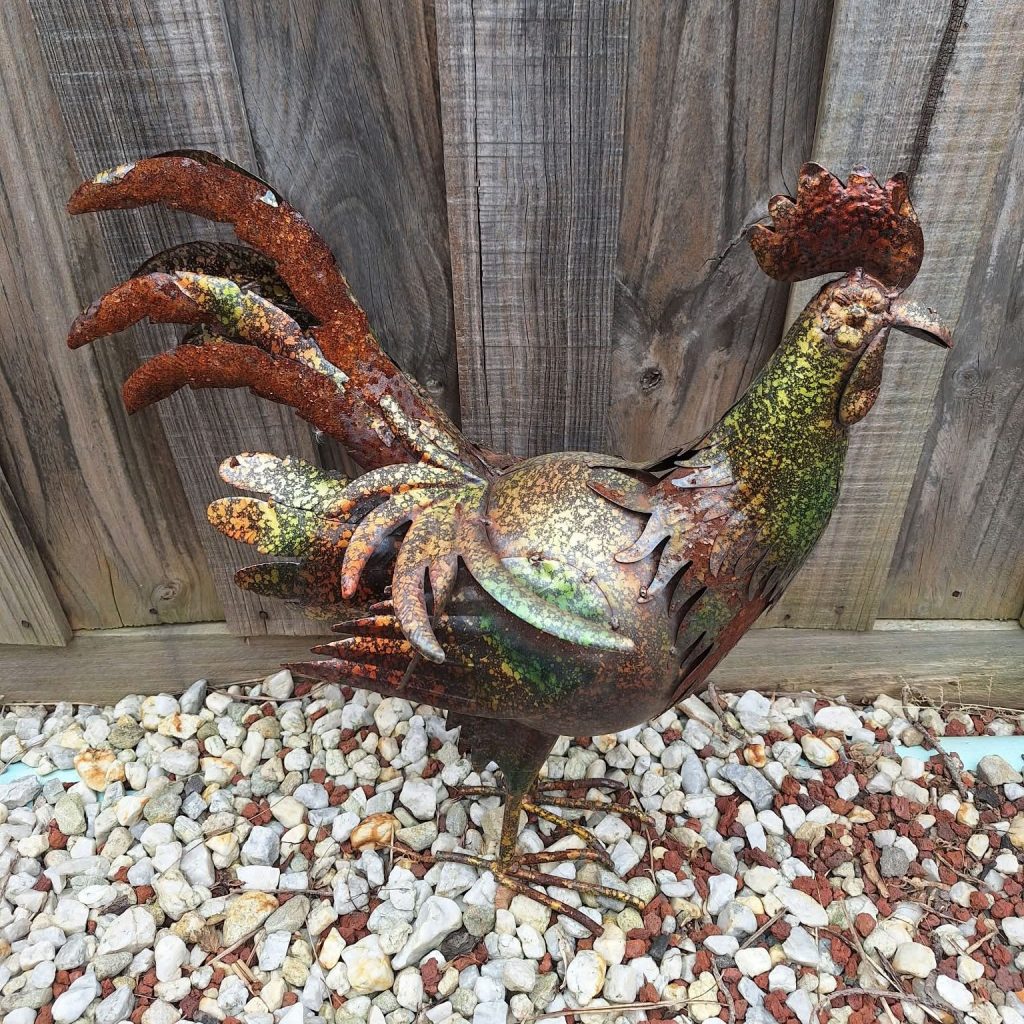
I used old cotton sheeting, sprayed with a 50/50 solution of water and white vinegar. The acidic white vinegar speeds up the oxidisation process. I wrapped the fabric strip tightly around the tail of my rooster ornament using cotton twine. I then covered it with a plastic bag, sealing the end with a rubber band. It was left outside in a sunny spot for 48 hours after which I could see the marks appearing on the fabric.
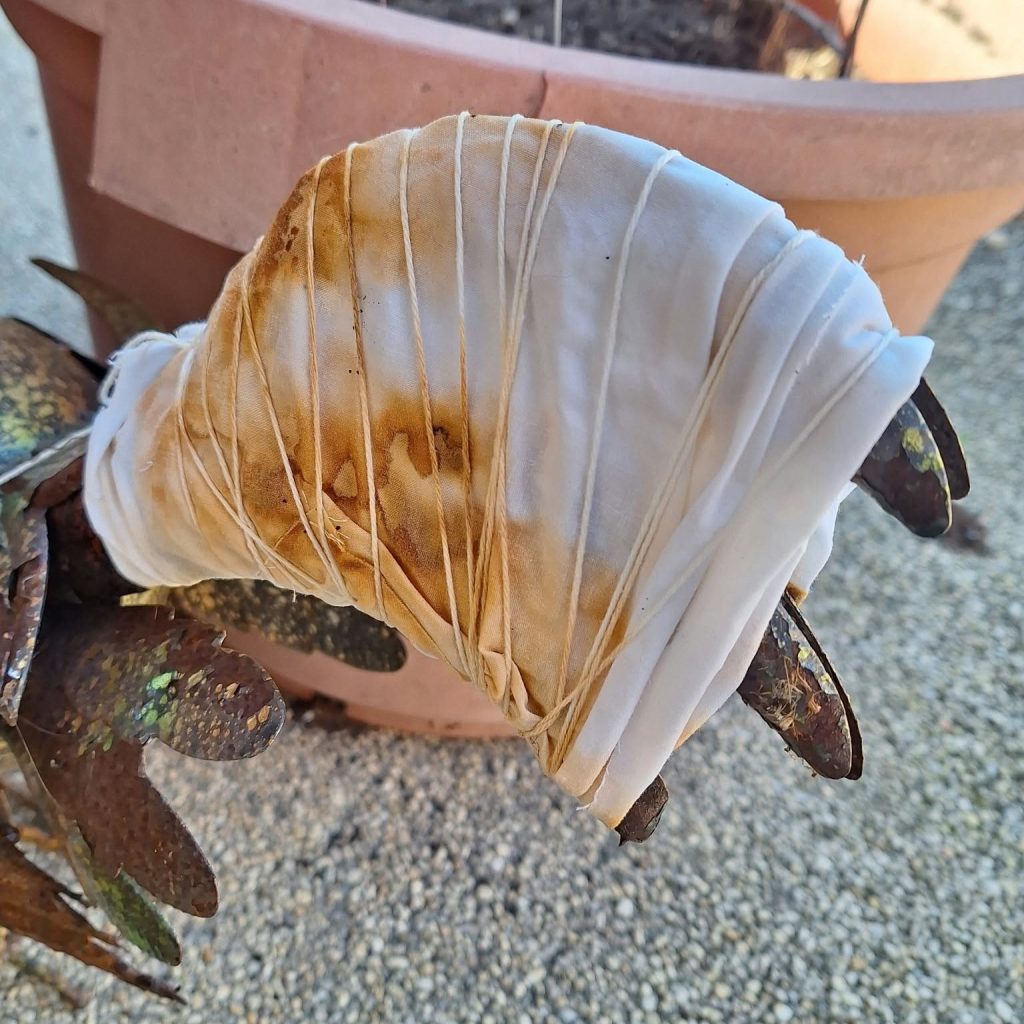
I unwrapped the bundle to discover what marks had been made. I was pleased to see the rust had penetrated through all the layers of the fabric as well as the cotton twine.
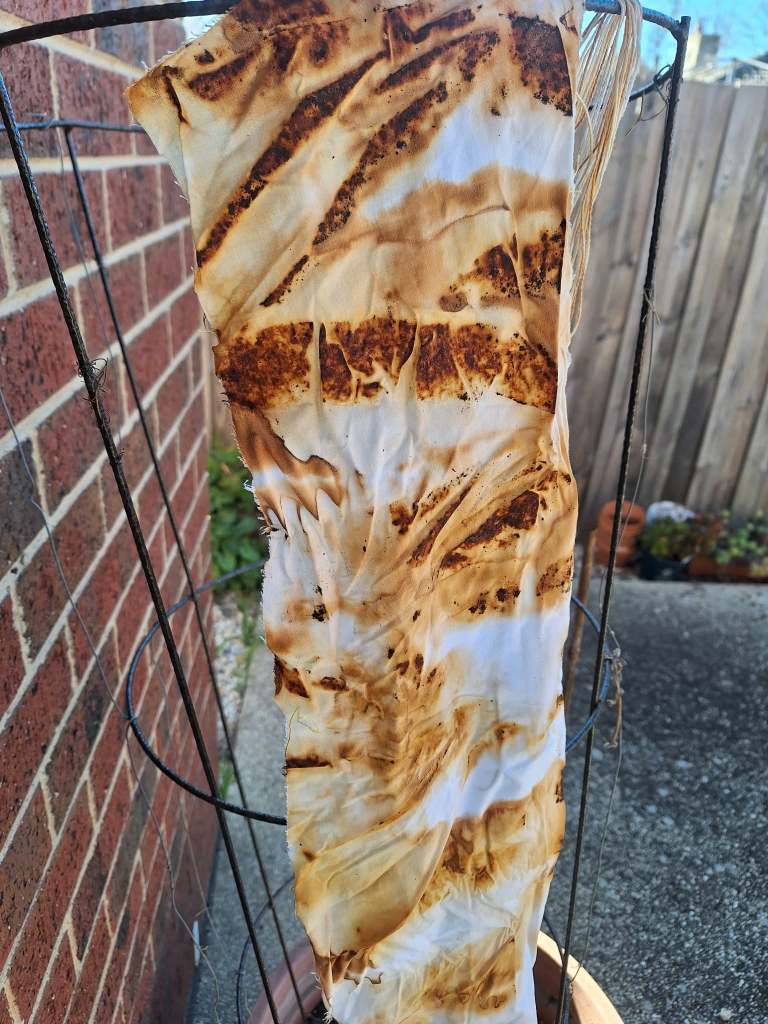
I repeated the process with some green fabric, which I only left for 24 hours. The marks were equally as interesting.
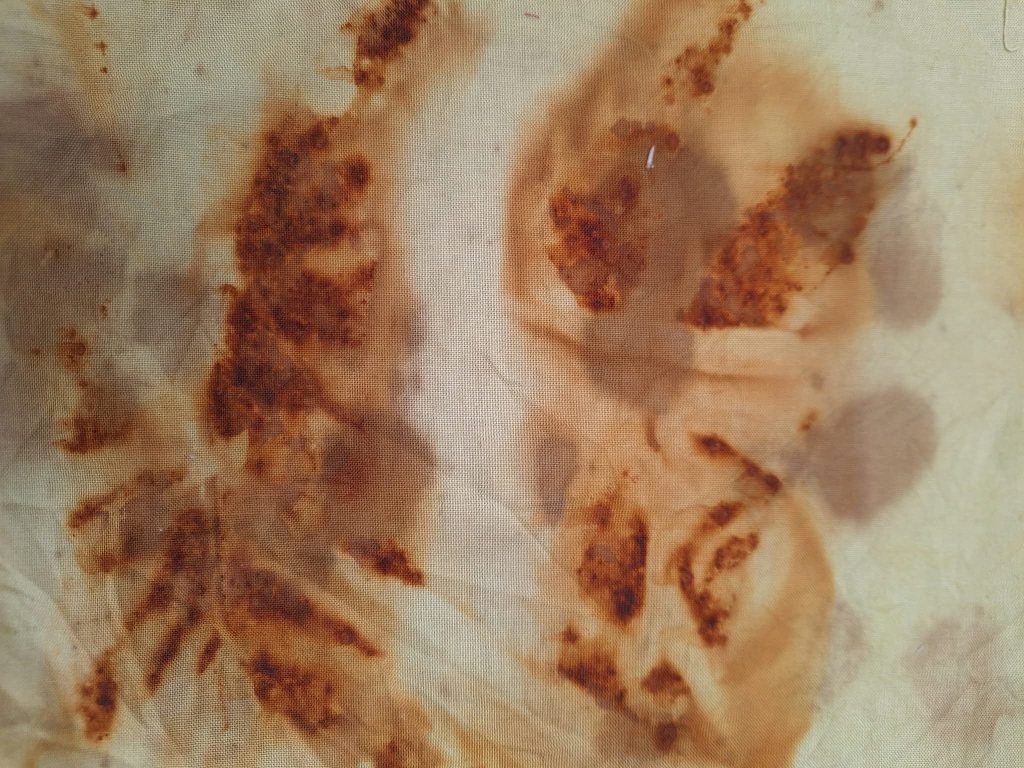
I had been told that tannins from tea would change the colour of the fabric from brown/orange to more muted greys. I was keen to see what would happen. I made some tea and dipped some of the fabric into the brew. I was expecting to need to soak it for a while, but the colour change was instant. It was really exciting to see the chemical reaction between the rust and tea tannins taking place before my eyes. It was like magic!
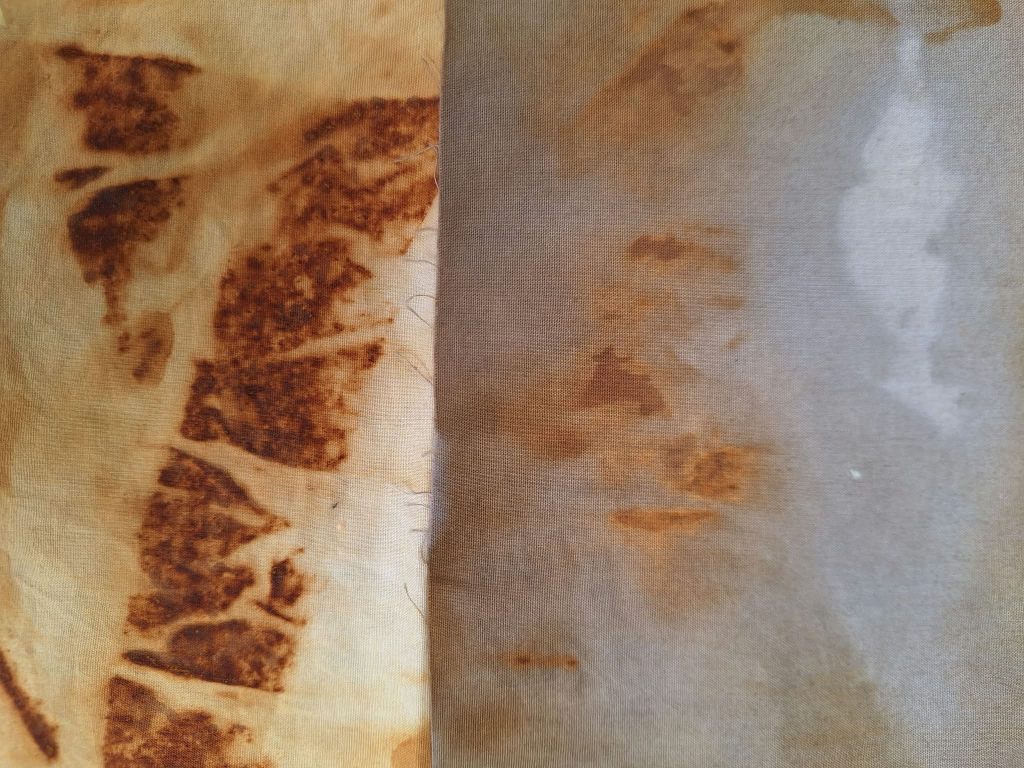
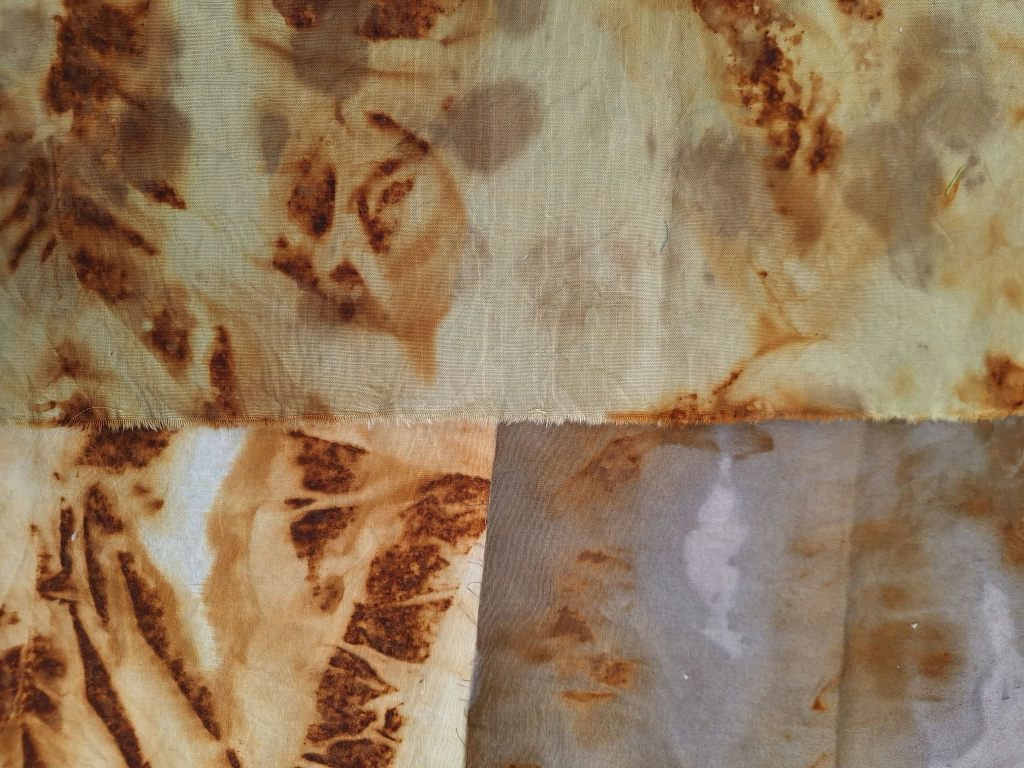
I’m keen to experiment with other acids and tannins to see what effect they have. I hope this has given you an insight into this simple process and that you’ll want to give it a try too.

Leave a Reply